Building Immersive Worlds and Evoking the Right Mood

Introduction:

As writers, one of our greatest powers is the ability to transport readers to new and captivating worlds. Building immersive settings and evoking the right mood are essential elements in creating a compelling narrative. By diving deep into the details, utilising sensory descriptions, and harnessing various techniques, we can create vivid atmospheres that resonate with readers and bring our stories to life.


Research and Immerse Yourself in the Setting:

To create an authentic and vivid atmosphere, immerse yourself in the details of your chosen setting. Whether it’s a bustling city, a remote countryside, or a fantastical realm, thorough research will enable you to portray the nuances and intricacies that make the world feel real and engaging.

Utilise Sensory Descriptions:

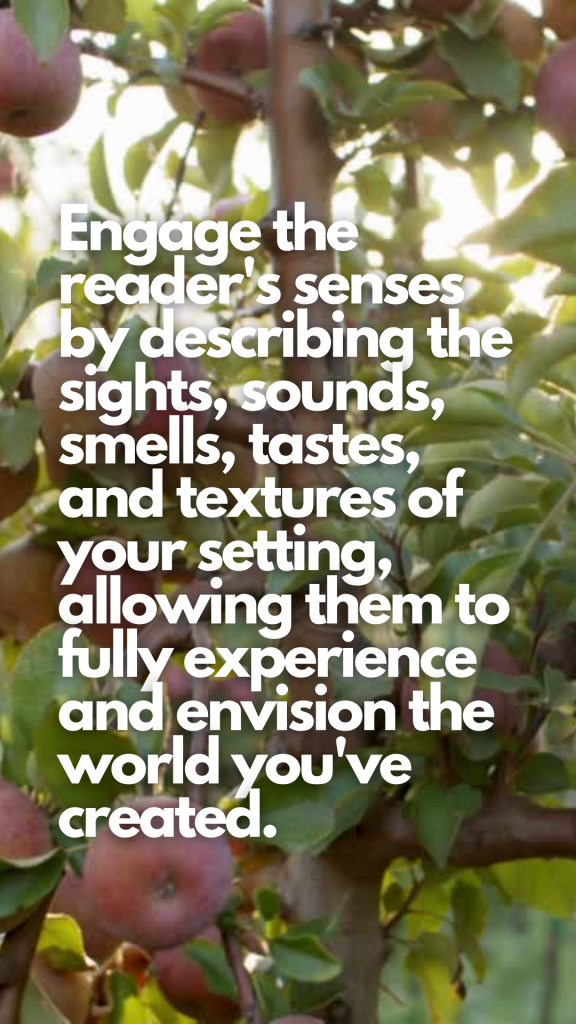
Engage the reader’s senses by vividly describing the sights, sounds, smells, tastes, and textures of your setting. Allow readers to experience the world through their senses, immersing them in its unique qualities and enhancing their connection to the story.

Show, Don’t Tell:

Rather than simply stating the atmosphere, show it through actions, dialogue, and vivid descriptions. Let readers feel the tension, smell the damp air, and hear the distant echoes. By immersing them in the sensory details, you create a more immersive and memorable reading experience.

Harness the Power of Weather:

Weather can be a powerful tool for setting the mood in your writing. Use rain, storms, fog, or sunshine to enhance the atmosphere and evoke specific emotions. The weather can act as a subtle backdrop or play a central role in intensifying the narrative.

Pay Attention to Lighting:

Describe how light interacts with the setting, influencing the mood. Whether it’s casting eerie shadows, illuminating key details, or creating a warm and inviting ambiance, the play of light adds depth and atmosphere to your world.

Use Contrasting Elements:

Contrast can add complexity and depth to your setting. Blend light and dark, old and new, or chaos and order to create a dynamic and compelling atmosphere. Contrasting elements provide a rich backdrop against which your characters and story can unfold.

Incorporate Cultural and Historical Nuances:

Infuse your setting with cultural and historical references that reflect the time period or specific location. By incorporating these nuances, you create a sense of authenticity that enhances the atmosphere and immerses readers in the world you’ve created.

Develop Unique Settings:

Create settings that are distinct and memorable, reflecting the mood and tone of your story. Whether it’s a quirky small town, a mysterious abandoned building, or a futuristic metropolis, make the setting integral to the atmosphere and give it a personality of its own.

Balance Description with Action:

While descriptive passages are important for setting the scene, be mindful not to overburden the narrative. Strike a balance between creating atmosphere and advancing the story. Keep the pacing steady and ensure that every description serves a purpose.

Use Symbolic Elements:

Integrate symbolic elements into the setting to deepen the atmosphere and convey deeper meaning. A cracked mirror, a towering oak tree, or a dilapidated house can evoke emotions and enhance the mood, adding layers of symbolism to your narrative.


Explore the Power of Sound:

Describe the soundscape of your setting, capturing the ambient noises, echoes, and distinct sounds that contribute to the atmosphere. Sound can immerse readers further into the world and create a multi-dimensional experience.

Infuse Cultural and Natural Elements:

Weave in the flora, fauna, architecture, and customs of the setting to ground the reader and make them feel like they are truly present in that world. These details add authenticity and depth to the atmosphere.

Consider the Impact of Time:

Describe how time affects the setting, whether it’s the transition from day to night, the passage of seasons, or the decay of a once-thriving location. The passage of time adds realism, depth, and a sense of history to your world.

Tap into Character Perceptions:

Show how your characters perceive the setting and use it to reflect their emotions, thoughts, and perspectives. Their reactions can enhance the atmosphere and provide a unique lens through which readers experience the world.

Continuously Revise and Refine:

As you write, revisit your descriptions of the setting and atmosphere, ensuring they align with the overall tone and mood of your story. Refine them to create a fully immersive and captivating experience for readers.

Conclusion:

Building immersive worlds and evoking the right mood is an art that requires attention to detail, imagination, and an understanding of the impact of your words on readers. By employing these techniques and crafting vibrant settings, you can transport your audience to new realms and create a reading experience that lingers long after the last page. So, dive deep, explore, and allow your words to breathe life into your storytelling.

#writing #storytelling #writingtips


Thanks for taking the time to read this post. If you found it informative and entertaining, please consider sharing it with your friends and followers on social media. And if you have any feedback or suggestions for future topics, I’d love to hear from you in the comments below. Don’t forget to subscribe for more content and updates, or pop over to my newsletter page for more crime stuff, direct to your inbox every month.

See you soon.

Wendy

The Art of Crafting Engaging Story Arcs and Maintaining a Dynamic Rhythm

Introduction:

In the realm of storytelling, captivating your readers and keeping them hooked from start to finish is a paramount goal. One key aspect of achieving this is by creating engaging story arcs and maintaining a good rhythm throughout your narrative. By employing effective techniques, you can ensure that your story flows seamlessly, keeps readers invested, and delivers a satisfying reading experience.

Establish Clear Goals and Stakes:

To lay a solid foundation for your story, it is crucial to establish clear goals for your protagonist and convey the consequences of success or failure. This creates a compelling driving force that propels the plot forward and keeps readers invested in the outcome.

Create Conflict and Obstacles:

Conflict is the lifeblood of storytelling. Introduce challenges, conflicts, and obstacles that the protagonist must overcome, providing opportunities for growth and development. This not only adds depth to your characters but also keeps the story dynamic, gripping the reader’s attention.

Use Rising Action:

Craft a compelling narrative by gradually building tension through the rising action. Increase the stakes and intensify conflicts as the story progresses, creating a sense of anticipation and ensuring that readers are captivated by each turn of events.

Vary the Pace:

To maintain reader interest and prevent monotony, it is essential to vary the pace of your story. Alternate between moments of high intensity and slower, reflective moments. This ebb and flow in pacing creates a balanced rhythm and keeps readers engaged throughout the narrative.

Incorporate Plot Twists:

Surprise your readers with unexpected plot twists that challenge their expectations. Well-placed plot twists inject excitement and reinvigorate the story, leaving readers eager to discover what unfolds next.

Utilise Cliffhangers:

End chapters or sections with suspenseful moments or unanswered questions to leave readers craving more. Cliffhangers create anticipation and propel readers forward, ensuring they eagerly turn the pages to uncover the next twist or resolution.

Show Character Growth and Development:

Characters that evolve and undergo personal growth resonate deeply with readers. Allow your characters to change and learn from their experiences, providing emotional depth and investment for the audience.

Use Foreshadowing:

Plant subtle hints or clues early on in the story that foreshadow future events or revelations. This technique builds anticipation, creates a sense of cohesion, and rewards attentive readers.

Trim Excess and Maintain Focus:

Streamline your narrative by eliminating unnecessary elements that may detract from the pacing and focus of the story. Each scene, event, or subplot should serve a purpose in advancing the main plot, ensuring a smooth and engaging reading experience.

Test and Revise:

Seek feedback from beta readers or critique partners to evaluate the pacing of your story. Adjustments may be necessary to maintain a balanced and engaging pace throughout the narrative. Embrace the iterative process of testing and revising to refine your storytelling skills.

Conclusion:

Crafting engaging story arcs and maintaining a good rhythm is a delicate art that requires skill and finesse. By implementing these techniques, you can plot your story effectively and ensure a compelling pace that keeps readers engrossed from beginning to end. Ready to rev up your storytelling engine? Unleash the power of pacing and create a page-turning masterpiece!

📚✨ #WritingTips #PlottingAndPacing #StorytellingMastery


Thanks for taking the time to read this post. If you found it informative and entertaining, please consider sharing it with your friends and followers on social media. And if you have any feedback or suggestions for future topics, I’d love to hear from you in the comments below. Don’t forget to subscribe for more content and updates, or pop over to my newsletter page for more crime stuff, direct to your inbox every month.

See you soon.

Wendy

Mastering the Art of ‘Show, Don’t Tell’: Creating Immersive and Emotionally Resonant Writing

Introduction:

Whether you’re a seasoned storyteller or an aspiring wordsmith, mastering the technique of ‘Show, Don’t Tell’ can elevate your storytelling to new heights. By engaging the senses, evoking vivid imagery, and crafting immersive experiences, you can captivate your readers and forge a deep emotional connection.

Here’s how to unlock the power of ‘Show, Don’t Tell’ and transform your writing.

The Essence of ‘Show, Don’t Tell’

Instead of explicitly stating emotions or facts, let the readers experience them through rich descriptions, evocative imagery, and compelling actions. By doing so, we enable readers to engage their imaginations and become active participants in the story.

Techniques for Crafting Authentic Emotion

Use Body Language: Explore the intricate language of the body to convey emotions. Describing physical reactions like trembling hands, clenched fists, or a quivering voice allows readers to sense the characters’ inner turmoil or excitement.

Show through Actions and Behaviours: Actions speak louder than words. Show characters’ emotions through their behaviours and choices. A character’s gentle touch, a tear rolling down their cheek, or an impulsive outburst can reveal a wealth of emotion.

Engage the Senses: Enliven your scenes by immersing readers in sensory details. Paint a vivid picture with sights, sounds, smells, tastes, and textures that enhance the atmosphere and evoke emotional responses in your readers.

Show through Dialogue: Craft dialogue that subtly reveals emotions. Pay attention to the characters’ word choices, pauses, and tone of voice. Let their speech patterns and nonverbal cues convey their underlying feelings.

Harness Subtext and Symbolism: Infuse your writing with layers of meaning by employing subtext and symbolism. Allow readers to read between the lines, discovering deeper emotions and themes through subtle hints and metaphors.

Creating Immersive and Resonant Scenes

‘Show, Don’t Tell’ can be applied to specific scenes and settings. Whether it’s an intense action sequence, a tender romantic encounter, or a hauntingly atmospheric landscape, you can use these techniques to transport readers into the heart of your story.

•            Rather than telling the reader that the room was messy, show clothes strewn across the floor, stacks of papers on the desk, and dirty dishes piled up on the counter, painting a vivid picture of the disarray.

•            Instead of telling the reader that the coffee was hot, show the steam rising from the mug, the protagonist blowing on it cautiously, and the warmth spreading through their hands as they took a careful sip.

•            Instead of telling the reader that the child was excited, show them jumping up and down, clapping their hands, and shouting with glee when they received the gift they had been longing for.

•            Instead of telling the reader that the detective was suspicious, show them narrowing their eyes, leaning forward, and scrutinising the suspect’s every move, conveying their doubt and mistrust without explicitly stating it.

Practice, Refine, and Master

Becoming proficient in ‘Show, Don’t Tell’ requires practice and a keen eye for detail. But once you ‘get’ the principle you’ll be able to spot it in your writing and adjust your narrative to provide a deeper experience for your readers.

Conclusion:

By mastering the art of ‘Show, Don’t Tell,’ you’ll transform your writing into a rich tapestry of emotions and experiences. Invite readers to step into your world, where they can smell, taste, and feel every moment. Embrace this powerful technique and unlock the true potential of your storytelling prowess.

#ShowDontTell #WritingCraft #ImmersiveStorytelling #WritingTips


Thanks for taking the time to read this post. If you found it informative and entertaining, please consider sharing it with your friends and followers on social media. And if you have any feedback or suggestions for future topics, I’d love to hear from you in the comments below. Don’t forget to subscribe for more content and updates, or pop over to my newsletter page for more crime stuff, direct to your inbox every month.

See you soon.

Wendy


https://amzn.eu/d/2wbPkvR