Unpacking the Power of Storytelling: A Look at Our Ancient Connection to Narrative

From ancient myths to modern blockbusters, storytelling has been a fundamental part of human culture for thousands of years. We love to hear stories, whether they’re told around a campfire, read in a book, or watched on a screen. But why do stories captivate us so much? What is it about a good tale that can transport us to another world, evoke strong emotions, and leave a lasting impression?

In this blog post, I’m going to look at the psychological and cultural reasons why humans are drawn to stories and why they continue to be such a powerful force in our lives.

Reading stories with my mum is one of my earliest and most cherished memories and I love writing stories for my daughters (see pic – my debut, in glorious A5 printer paper!)


From an early age, long before we can read, we’re immersed in stories. Initially we’re engaged by the repetition of sounds and patterns which promotes brain development and imagination, develops language and emotions, and strengthens relationships. We have a need for emotional connection and stories allow us to gain a deeper understanding of other people’s experiences, in a memorable and immersive way.

Throughout history, humankind has used stories to share information. Stories can elicit change, warn or teach important concepts, or simply entertain us. We might laugh or cry, feel anxious or angry with the characters we’ve invested in, and any of these provide a powerful emotional connection.


The science bit


As a storyteller, I find this fascinating, and so is the science bit. ‘Narrative progression’ as it’s called, feeds our brains. Being engrossed in a book or movie stimulates our senses and cause measurable reactions in our brain’s chemistry. Dopamine makes us feel motivated and focused, oxytocin (the ‘love chemical’) promotes feelings of trust and bonding, while endorphins give us a positive buzz.
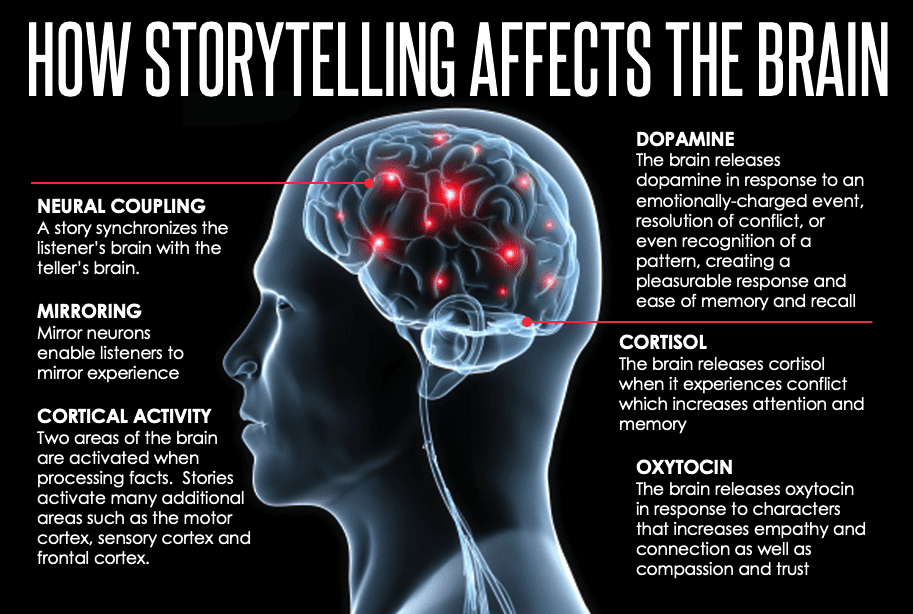
Image credit: Pamela Rutledge


The two parts of our brain most engaged by stories are the prefrontal cortex and the amygdala. The prefrontal cortex is the area of the brain responsible for cognition and understanding. As we follow a story, it absorbs the information and commits it to short-term memory. The amygdala, however, is responsible for emotion and long-term memory. As our prefrontal cortex receives information, the amygdala essentially “codes” the information based on the emotion we feel, which aids the processing of long-term memories. Both areas of the brain are essential to deep learning and recall.


What makes a good storyteller?


Think about anyone you know who you’d describe as a good storyteller, someone at work or a friend. What makes them so engaging? Chances are they use relatable characters, intriguing plot, emotional connection and a satisfying conclusion, mingled together to create a cocktail of all those chemicals.


As readers, we naturally search for something in characters which we can relate to. It enhances our experience of the narrative and the feeling of trust and empathy can give us a quick dose of oxytocin. The ‘hero’s journey’ from adversity to triumphant success is a familiar trope used by storytellers and forms the backbone of many great stories. The journey from adversity to triumph fires up all the chemicals in our brains and gives us that ‘feel good’ feeling. Subconsciously we search for an emotional connection and without it even a good story might not be committed to memory.


What about happy endings? Again, many great stories lead us to a satisfying conclusion, which gives us another dose of feel good as all loose ends are tied together and the hero or heroine triumphs. If we don’t experience this pay-off, we can be left feeling cheated or disappointed. Think of that series you invested hours in, where the big reveal at the end is more of a limp fob-off. It’s devastating!


Storytelling is critical in our learning process. It aids our engagement with a subject and our retention of information.


Can you use storytelling in business?


Storytelling is just as important in business too, and it doesn’t matter how dry the subject is.

A few years ago I worked as an actor on a commercial project for a battery manufacturer. The client had asked a video production company ABF, to create a training video on battery safety for its employees. ABF presented a concept which went on to win awards and was a wonderfully creative and innovative interpretation of the brief.


They told a story.


The video was shot like a mockumentary and showed a group of employees going through a series of training sessions. They had characters (the employees), plot and conflict (the training sessions) emotional connection (the employee and trainer relationships) and a satisfying conclusion (everyone passed the training, with a hint of romance thrown in).
They created a training tool which people enjoyed and engaged with. It entertained, took people on a journey and helped with their learning.

If you’d like to watch it, it’s on Facebook here.

Humans love stories because they are the framework of our perception. Stories can change our minds, make us feel something new, win our hearts. We react deeply to stories when they communicate information in a primal, insightful way and it’s what we’re looking for when we browse the bookshelves, choosing our next read or when we’re trawling through Netflix.

Some stories have a huge impact on us and can change our perception of society. Here are a few examples of stories that have had a big impact on people’s lives:

The Diary of Anne Frank: This book, which chronicles the experiences of a young Jewish girl during World War II, has been a powerful tool for teaching empathy and tolerance to generations of readers. Many people credit Anne’s story with helping them better understand the horrors of the Holocaust and the importance of standing up against hatred and discrimination.

To Kill a Mockingbird: Harper Lee’s classic novel, which explores issues of race, justice, and morality in the American South, has been hailed as a powerful tool for promoting empathy and understanding. Many people credit the book with helping them see the world through a different lens, and inspiring them to take action against injustice in their own communities.

The Fault in Our Stars: This novel by John Green, which tells the story of two teenagers with terminal illnesses who fall in love, has been a powerful source of inspiration and comfort for many people dealing with illness or loss. Readers have praised the book for its honest portrayal of the challenges of living with a serious illness, and its message of hope and resilience in the face of adversity.

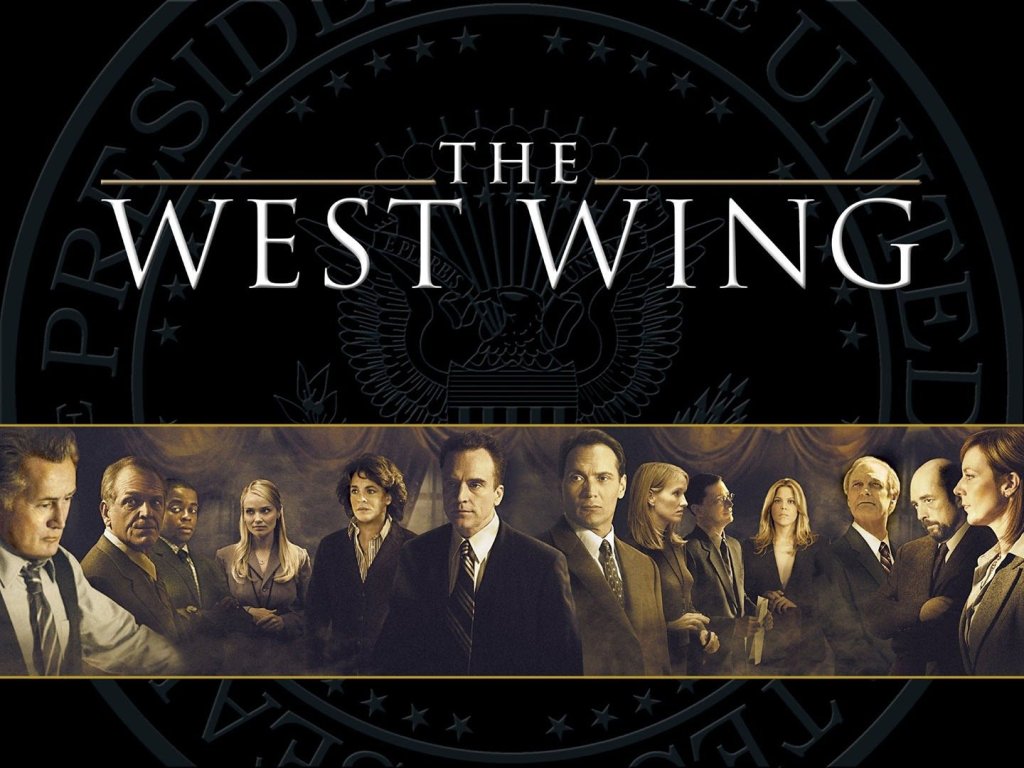
The West Wing: This TV show, which aired from 1999-2006, has been credited with inspiring a new generation of young people to get involved in politics. The show, which follows the staff of the fictional White House under President Jed Bartlet, has been praised for its smart writing, engaging characters, and optimistic portrayal of the political process.

Personal stories can be incredibly powerful in inspiring people to take action or make a change in their own lives. For instance, hearing the story of someone who overcame addiction or achieved a lifelong dream can be incredibly inspiring, and may motivate others to pursue their own goals and aspirations.


Stories have been a fundamental part of human culture and communication for thousands of years. As human beings, we are naturally drawn to narratives because they help us make sense of the world around us and understand ourselves and others better.

Stories have the power to move us emotionally, inspire us to take action, and connect us with others on a deeper level. Whether it’s a classic novel, a movie, or a personal anecdote, stories can transport us to different times, places, and perspectives, and help us gain new insights and perspectives.

So, the next time you find yourself captivated by a story, remember that you’re not alone – people have been fascinated by storytelling for generations, and it’s one of the things that makes us uniquely human.


Thanks for taking the time to read this post. If you found it informative and entertaining, please consider sharing it with your friends and followers on social media. And if you have any feedback or suggestions for future topics, I’d love to hear from you in the comments below. Don’t forget to subscribe for more content and updates, or pop over to my newsletter page for more crime stuff, direct to your inbox every month.

See you soon.

Wendy
Beyond the Sensationalism: Understanding the Complexities of Our Fascination with True Crime

Crime and killers have long captivated the public imagination, whether through sensational media coverage, true crime documentaries, or fictional depictions in books and movies. But why are we so fascinated by these dark and often disturbing topics? What drives our interest in the minds and actions of those who commit violent crimes?

In this blog post, I’ll explore some of the reasons why crime and killers have become such enduringly popular subjects and look at topics that captivate us, our fascination with the macabre, and the ways in which popular culture has both reflected and reinforced our interest in these topics.

Our fascination with killers

The public’s fascination with notorious killers such as Ted Bundy and Jeffrey Dahmer are a stark example of our captivation with the actions and motivations of criminals. These two individuals in particular, due to the heinous nature of their crimes and their widespread media coverage, have become household names and continue to be subjects of intense public interest.

Bundy’s charm and charisma, coupled with his horrific acts of violence against women, have made him a subject of fascination for decades. His high-profile trial and eventual execution only added to his infamy, with media outlets covering every aspect of his case in minute detail.

Similarly, Dahmer’s gruesome crimes, which included cannibalism and necrophilia, shocked and horrified the public. His trial, which revealed the depths of his depravity, was widely covered in the media and cemented his status as one of the most notorious killers in modern history.

The ethical dilemma

When my mum (an avid reader and a fan of gory dramas) read an early draft of ‘Justified’ she said to me, “How did you come up with such a grisly murder?” It made me think. Not so much about where the idea came from, but about the concept of murder as entertainment and the ethical dilemma faced by murder mystery and crime writers.

Recently, the same question has been raised about the glamorisation of true crime following the huge success of the Jeffery Dahmer series. True crime is one of the fastest growing genres of entertainment and its followers are insatiable, demanding more stories about humanity at its darkest.

Serial killers tantalize people much like traffic accidents, train wrecks, or natural disasters,” Scott Bonn, professor of criminology at Drew University and author of Why We Love Serial Killers, wrote at TIME. “The public’s fascination with them can be seen as a specific manifestation of its more general fixation on violence and calamity. In other words, the actions of a serial killer may be horrible to behold but much of the public simply cannot look away due to the spectacle.”

But true crime is about real people, in real, terrible situations, and that comes with real consequences. Some insist true crime exploits victims and their families, while others argue that it helps people to process their greatest fears, that it gives an insight into our culture and norms as well as our anxieties and values. Whichever side of the fence you sit on, ethically, true crime blows through our lives on a precarious breeze.

Our enduring fascination

The enduring fascination with crime and killers is a phenomenon that has captivated people for centuries. The media is awash with true crime shows, books, and podcasts, all catering to our insatiable appetite for the dark and disturbing. But why are we so drawn to these stories of murder and mayhem?

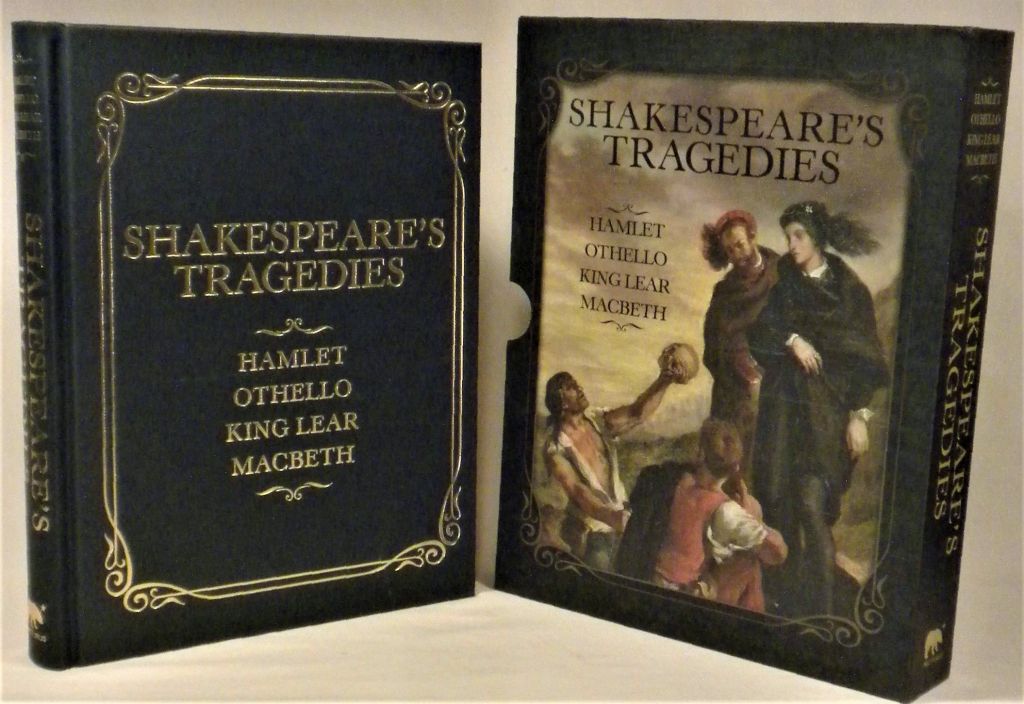
Some might argue that people are interested in crime and killers simply because it’s human nature to be drawn to sensational or dramatic events. After all, tales of violence and wrongdoing have been part of human storytelling for millennia, from the ancient Greek myths to Shakespeare’s tragedies. However, this argument alone does not fully account for the enduring popularity of these topics.

The appeal of true crime content, in particular, is not simply due to its sensational nature. True crime often involves detailed and often graphic depictions of real-life crimes, which can provide a sense of realism and authenticity that fictional crime stories may lack. It allows us to explore the darkest corners of the human psyche and understand the motivations behind heinous acts.

Another counterargument might be that our fascination with crime and killers is a result of media sensationalism, with news outlets and entertainment companies exploiting our fear and fascination with violence for profit. While it’s true that media coverage can shape public perceptions of crime and violence, our interest in these topics long predates the rise of modern media.

For instance, newspapers in the 19th century reported on sensational murder trials, and crime fiction has been popular since the days of Edgar Allan Poe.

So what are the cultural and psychological factors that drive our fascination with crime and killers?

One possible explanation is that it provides a way to explore the darker side of human nature in a safe and controlled environment. By consuming true crime content, we can satisfy our curiosity about these topics without actually putting ourselves in danger. Additionally, it may allow us to feel a sense of superiority or moral superiority, by exploring the actions of those we consider to be deviant or immoral.

Fascination with death

As I mentioned earlier, as human beings our fascination with killers, murder and all things death related has been around for centuries.

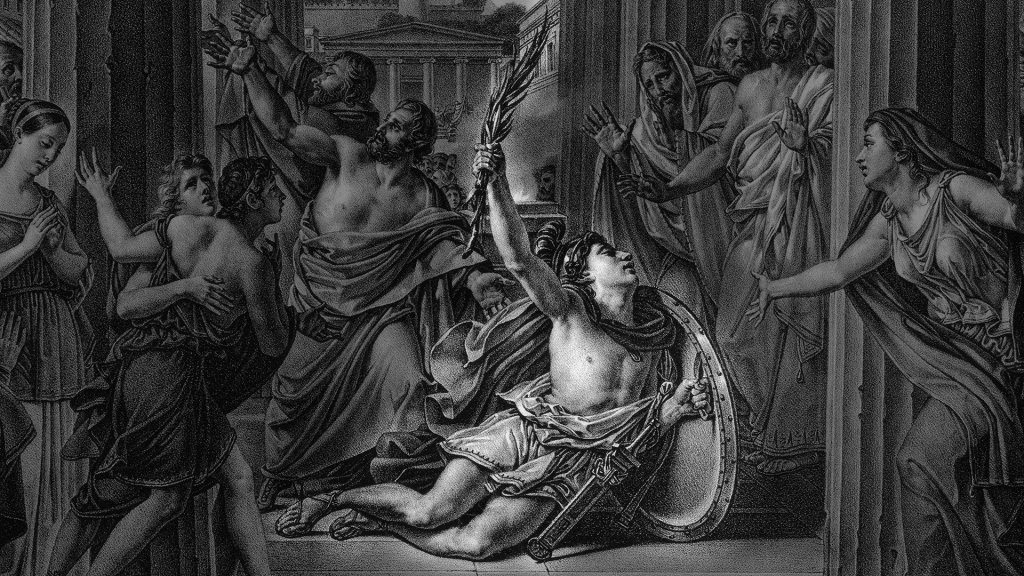
The paradox of violence and enjoyment dates back as long as human society and recorded history, from the prehistoric period and later Roman gladiatorial games.

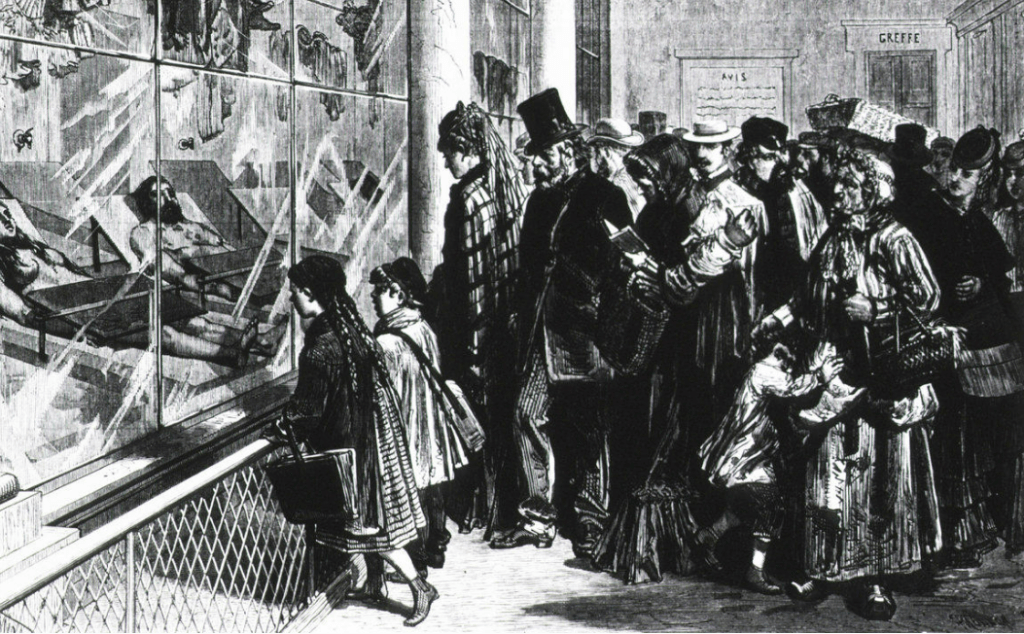
The Victorians were fascinated by death which extended to the production of a range of Memento Mori, objects designed to remind the owner of the death of a loved one and indeed, their own eventual demise. Photographs of dead relatives became an increasingly popular feature of family albums. Not entertainment as such, but their approach to violent crime was much more recreational:

  • The public would explore crime scenes before the arrival of the police following a murder.
  • This allowed them to view the gory scene in its entirety; dead bodies and all.
  • Funerals were attended out of curiosity and were quite often public events, especially if the deceased had been murdered.
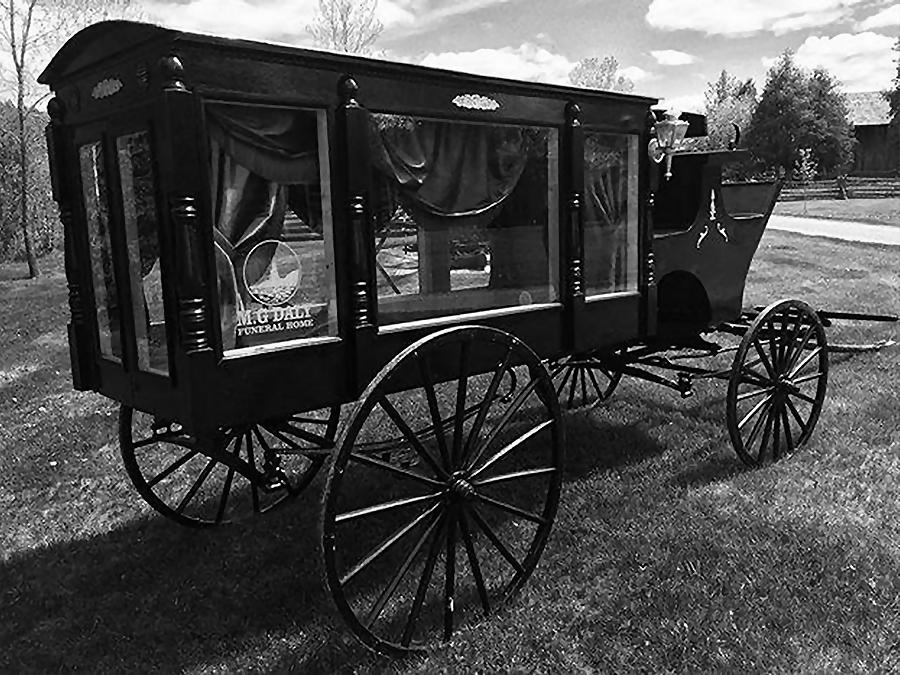
  • Accused murderers would be executed and then potentially carried down through main street for all the spectators to see.

In a completely morbid sense death is compelling, yet we fear it. You’d think that as we’re all so open about death –  reading about it, watching people die on TV and in movies – that the process of dying shouldn’t be a taboo topic. But, as soon as death becomes personal the discussion ends. Suddenly, it’s completely unreasonable to talk about death. A guy’s head being skewered on a spike in Last Kingdom – not a problem. Talking about your own death – no thanks.  

The origin of murder investigation in fiction

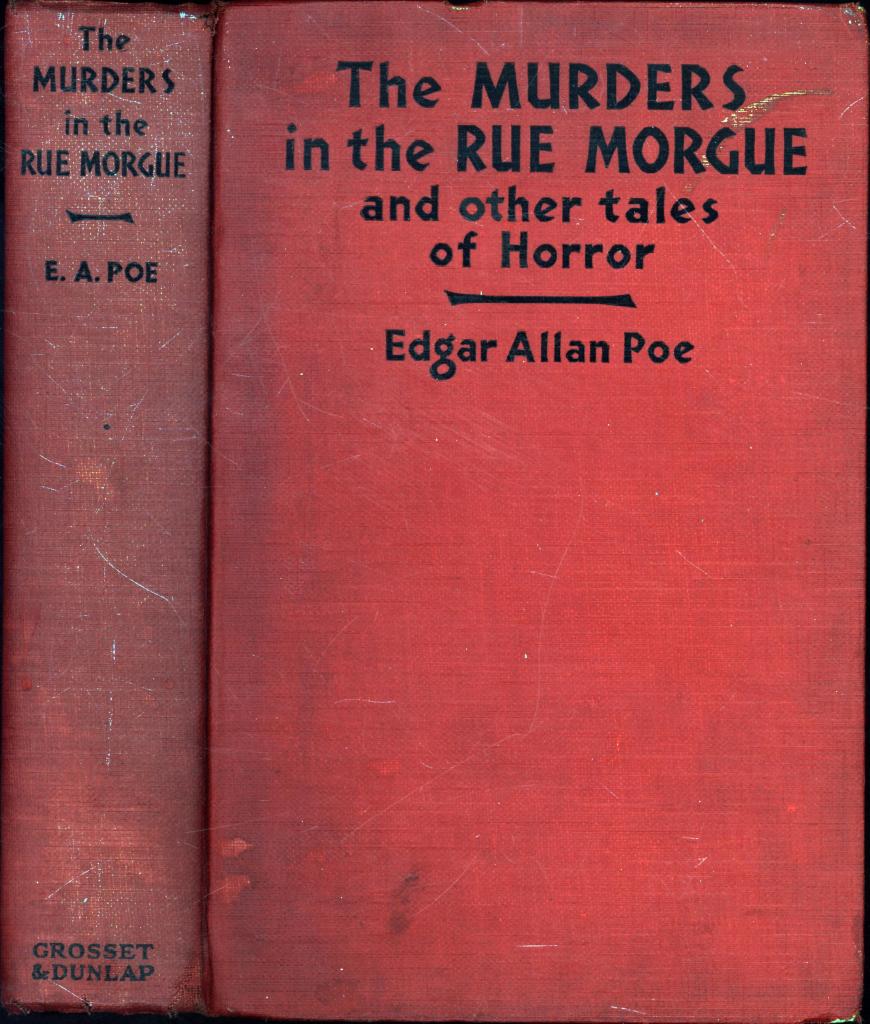
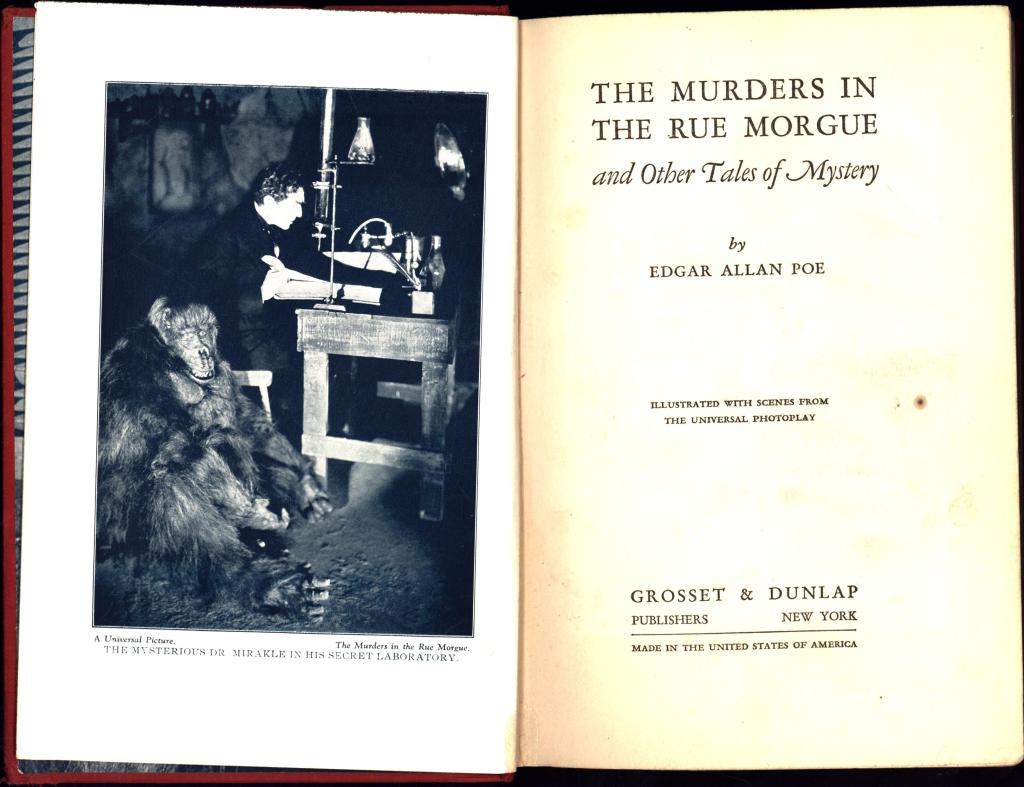
To bring this back to fiction, it’s perhaps no coincidence then that the first modern detective story is generally thought to be to Edgar Allan Poe’s “The Murders in the Rue Morgue” written in 1844, the Victorian era. In the story, Auguste Dupin solves the mystery of the brutal murder of two women in Paris. Poe’s Dupin isn’t a detective but he decides to investigate the murders for personal amusement. He displays many attributes which became literary conventions in later fictional detectives, including Sherlock Holmes and Hercule Poirot.

The genre has increased in popularity ever since. A quick search on Amazon for ‘murder fiction’ brings up 100k+ results.

Why is crime fiction so popular?

Crime fiction usually gives us a resolution along with an insight into what makes people tick. One of the reasons crime fiction is popular is because people are fascinated by human behaviour. Sometimes we’re warmed by the actions of others and at other times horrified and appalled by it. In fiction we can safely read about the darker side of humanity, and most of us enjoy the neatness of a crime solved and a criminal brought to justice. That doesn’t always happen in real life, but crime novels usually restore balance.

Plus, we like puzzles and piecing together the parts of the mystery. Can we solve the crime before the detective in the book?

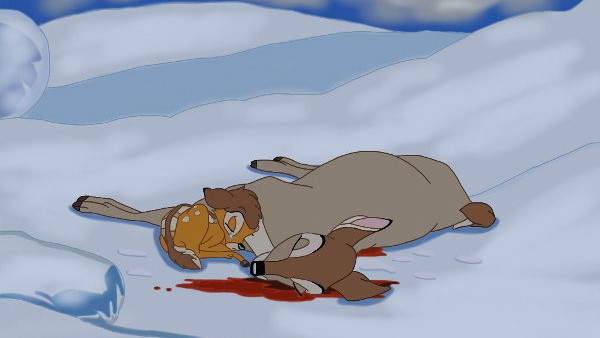
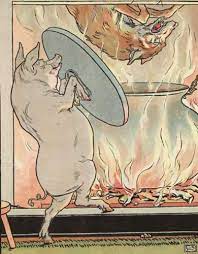
We grow up reading stories which follow the same pattern; the big bad wolf eventually gets his comeuppance for terrorising the three little pigs. The fact that he ends up boiled alive is a whole new subject altogether, but it demonstrates two things; firstly, the parallel between children’s and adult’s stories, and secondly that we’re exposed to violent death from an early age. Bambi broke my heart!

For me, a good crime novel is always about the characters, their motivations and their relationships rather than the actual murder. Yes, I enjoy the pace and suspense, but ultimately, I want to know what makes the characters tick.

Because a crime scene is fascinating, but the human mind is infinitely more intriguing.

In conclusion, our fascination with crime and killers is a complex and multifaceted phenomenon that can’t be reduced to any single explanation. While human nature and media sensationalism may play a role, they do not fully account for the enduring popularity of these topics or the specific appeal of true crime content. Rather, a variety of cultural and psychological factors, such as our desire for justice, our fascination with the darker aspects of human nature, and our need for narrative resolution, all contribute to our ongoing interest in crime and killers.

Whether you’re a true crime enthusiast, a casual consumer of crime-related media, or simply curious about this enduring cultural fascination, I hope this blog post has given you some insights into the many factors that drive our interest in this topic.


Thanks for taking the time to read this post. If you found it informative and entertaining, please consider sharing it with your friends and followers on social media. And if you have any feedback or suggestions for future topics, I’d love to hear from you in the comments below. Don’t forget to subscribe for more content and updates, or pop over to my newsletter page for more crime stuff, direct to your inbox every month.

See you soon.

Wendy
Were Medieval staircases Designed to Give Right-Handed Defenders an Advantage?

The direction of the staircases in Broadstone Castle is mentioned a few times in ‘Justified’, but is it true that staircases were deliberately built in a clockwise (from the bottom upwards) direction to hinder raiders?

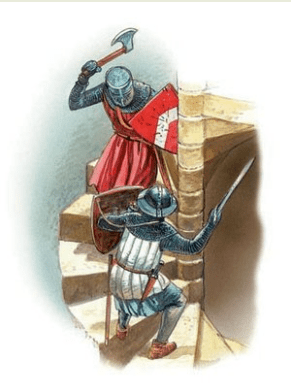
The theory is that attackers from below would struggle to wield a sword upwards without clanging into the central newel column (the narrowest part of the staircase) and they’d have to reach around the curve blindly while attacking. Perhaps more importantly, defenders retreating upwards would have the advantage of greater space to swing their sword arm downwards and a better view of the invaders below.

You could argue that anti-clockwise is just as problematic. Attackers would have their right hand (usually the sword wielding arm) against the outer wall of the staircase, which isn’t ideal either.

This image (from Newcastle Castle’s archives) demonstrates the issue. Undoubtedly, the attacker below is in an awkward position and is going to have a tough time swinging his sword around the central post to his right. But the chap with the axe isn’t having much fun either. His shield arm is scrunched up against the newel and he’s at risk of bashing his right arm against the outer wall as he swings.

Fighting in a tight, circular space is tough for both parties.

While there’s little solid evidence to support the case for clockwise construction, there’s also no evidence which proves otherwise. Sometimes, as John says in ‘Justified’, interpreting medieval history involves reading between sketchy lines and there’s no documented proof that potential attacks were ever an architectural or engineering consideration. You could argue, that if invaders are in your stairwell the battle is probably already lost.

A potentially more useful ploy was to build uneven stairs. The regular occupants would be aware of the irregularities, but an unseasoned invader would be more likely to stumble and alert the defenders above of their approach. Again though, were uneven steps a deliberate design feature or just a result of years of use and the availability of materials at the time?

There are also practical considerations. Someone carrying a pail in their right hand for example would find it easier to ascend in a clockwise direction. Or perhaps the stairwells were used in pairs, with one for ascending, one for descending, as passing on a spiral staircase is a tricky business. It makes sense that practical, daily considerations would outweigh the possibility of needing to fight invaders.

During my research for the book, the most comprehensive study I found on this subject was compiled by the Castle Studies Group. Established in 1987 by the then Secretary Dr Robert Higham, the Castle Studies Group includes members both professional and amateur from a wide and varied range of historical and archaeological backgrounds, both in the British Isles and overseas.

Their extensive study of this subject, including dozens of site visits, shows that while Norman castles did favour clockwise staircases, from the mid-1200s to the end of the 15th century, anti-clockwise took over. In some instances, this appeared to be a design preference or for domestic flow, with staircases in opposing towers mirroring each other rather than turning in the same direction.

So, gradually over several hundred years, the trend for clockwise evolved into a tendency to have both, and aesthetic needs overtook practical considerations.

A bit like mobile phones, which started out as handheld bricks, went smaller and smaller and are now huge again …

If you have a spiral staircase, let me know which way it goes!


If this intrigues you, more comprehensive articles on the subject can be found below:

The Rise of the Anti-clockwise Newel Stair, Neil Guy, http://www.castlestudiesgroup.org.uk/CSGJournal2011-12X5stairs.pdf

Mediaeval Mythbusting Blog #3: The Man Who Invented the Spiral Staircase Myth, James Wright, https://triskeleheritage.triskelepublishing.com/mediaeval-mythbusting-blog-2-the-man-who-invented-the-spiral-staircase-myth/


Thanks for taking the time to read this post. If you found it informative and entertaining, please consider sharing it with your friends and followers on social media. And if you have any feedback or suggestions for future topics, I’d love to hear from you in the comments below. Don’t forget to subscribe for more content and updates, or pop over to my newsletter page for more crime stuff, direct to your inbox every month.

See you soon.

Wendy
Castle Inspiration From A UK Staycation

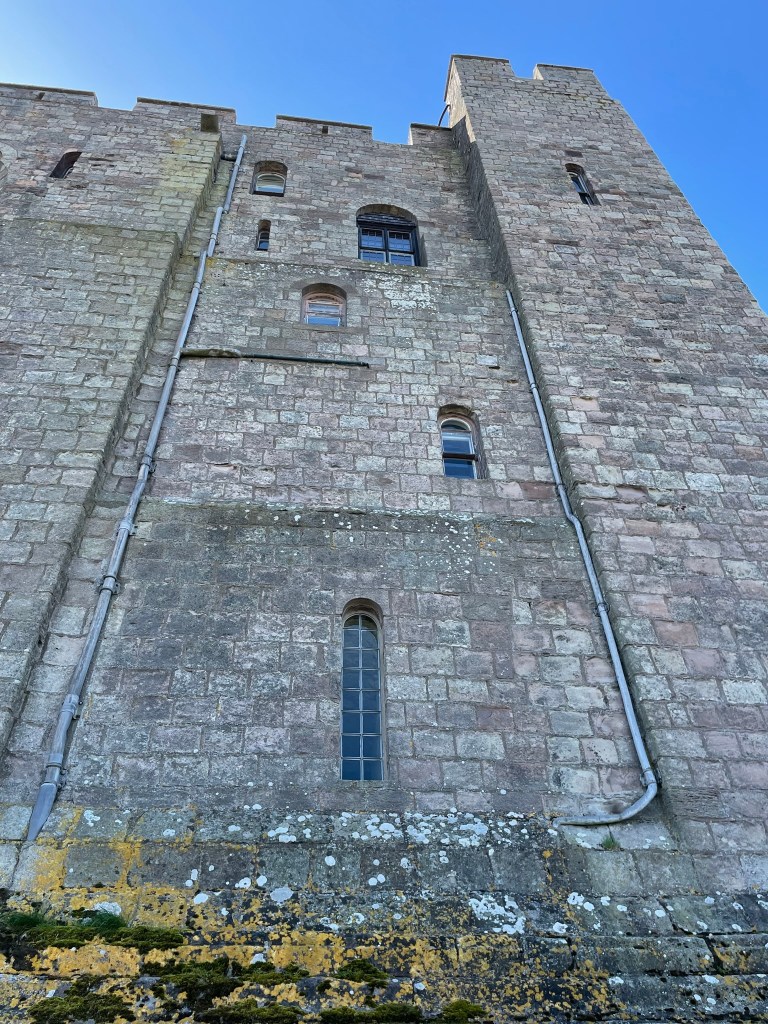
I’ll be honest; we mostly planned our last family staycation based on the number of castles we could visit in one week.

I’m such a castle geek, and having visited most of the castles in the UK I was excited to discover I’d never been to any in Northumberland. Fortunately, my partner shares my love of history, and our daughters are so laid back they’re happy to romp around some ramparts for a while as long as there’s an ice cream at the end of it.

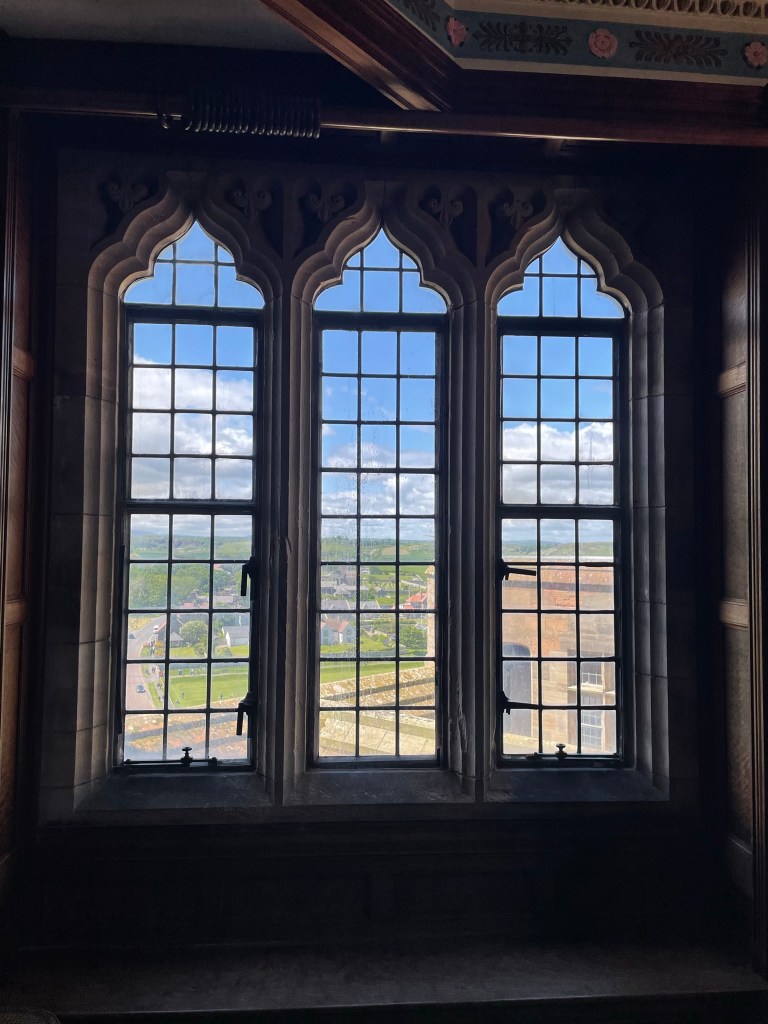
It’s a double win for me. I’m an amateur photographer and it’s a great excuse to get out my ‘big’ camera and shoot some interesting pics for the family album and my inspiration files.

Northumberland didn’t disappoint. I’m going to sound like the Tourist Board here, but it’s a beautiful part of the country, rich in history and packed with places to visit. Plus – bonus – no one was travel sick on the journey.

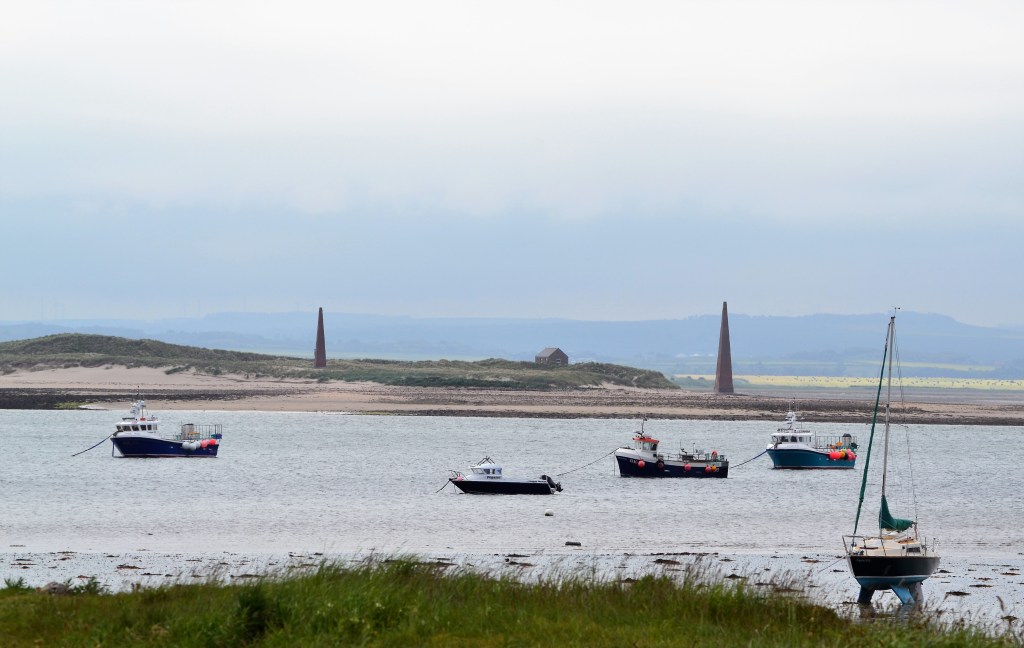
Lindisfarne

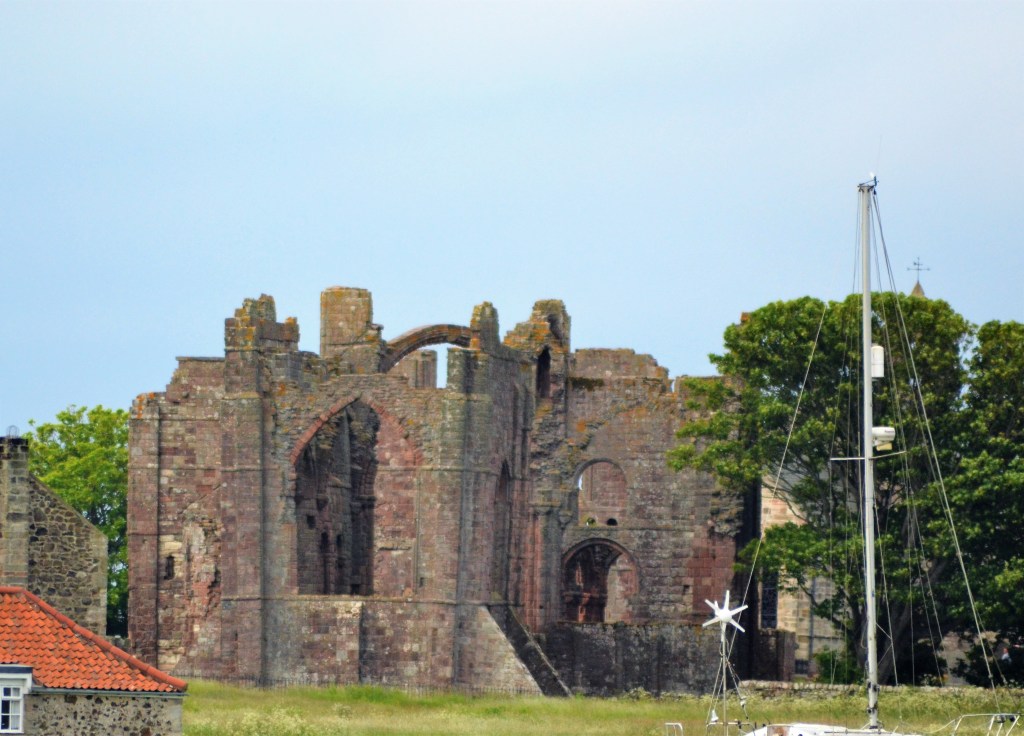
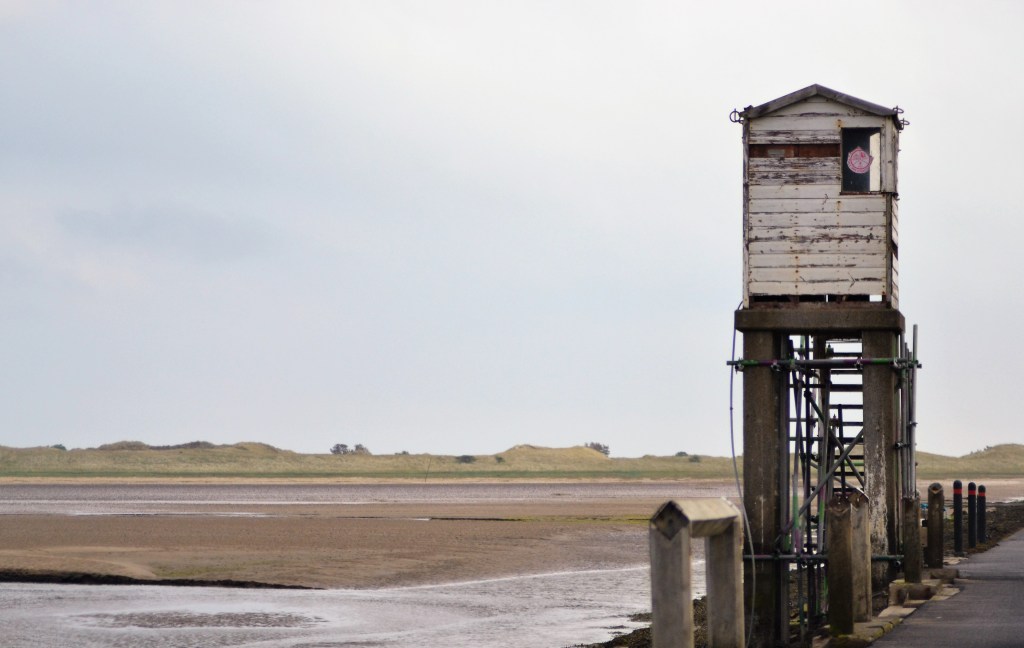
No trip to Northumberland is complete without a trip to Holy Island. Historically, it’s a fascinating place, and its limited accessibility adds to its mystique. The causeway road can only be crossed during certain hours when the tide out, so it varies daily.  Lindisfarne Priory on the island was one of the most important centres of early Christianity in Anglo-Saxon England.

Here’s the history bit:

St Aidan founded the monastery in AD 635, but St Cuthbert, prior of Lindisfarne, is the most celebrated of the priory’s holy men. After his death, people came to pray at the grave and claimed miracles of healing occurred after their visit. To the monks of Lindisfarne this was a clear sign that Cuthbert was now a saint in heaven and as the saint’s community, they should declare this to the world.

They decided to allow 11 years for his body to become a skeleton and then ‘elevate’ his remains on the anniversary of this death (20th March 698). To their surprise, when they opened the coffin, they found a complete and undecayed body.

The cult of St. Cuthbert began, and pilgrims began to flock to the shrine.

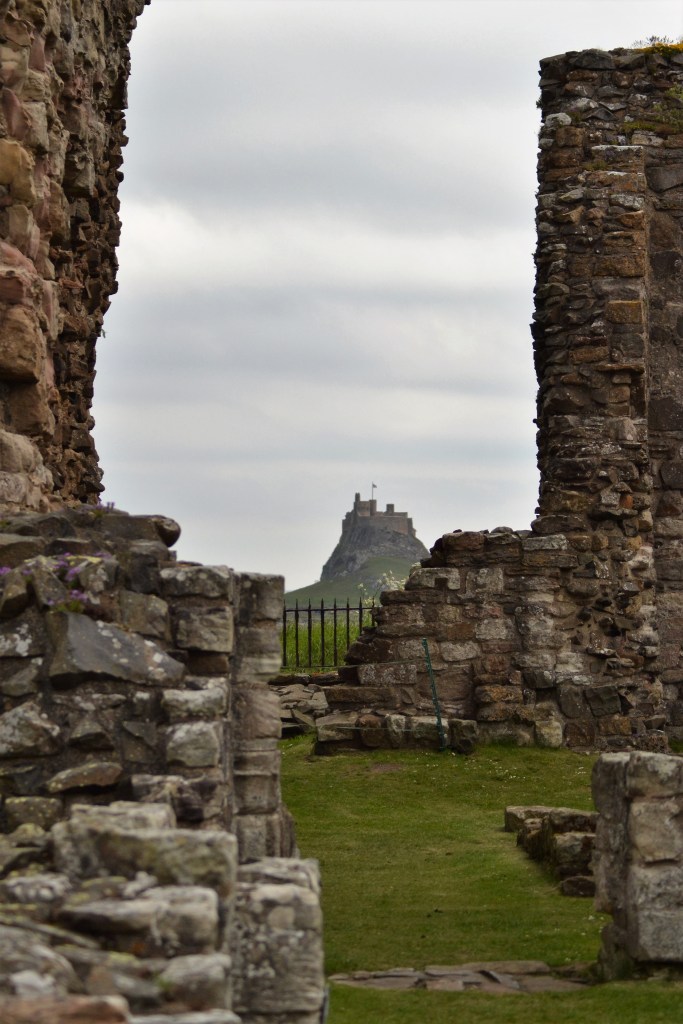
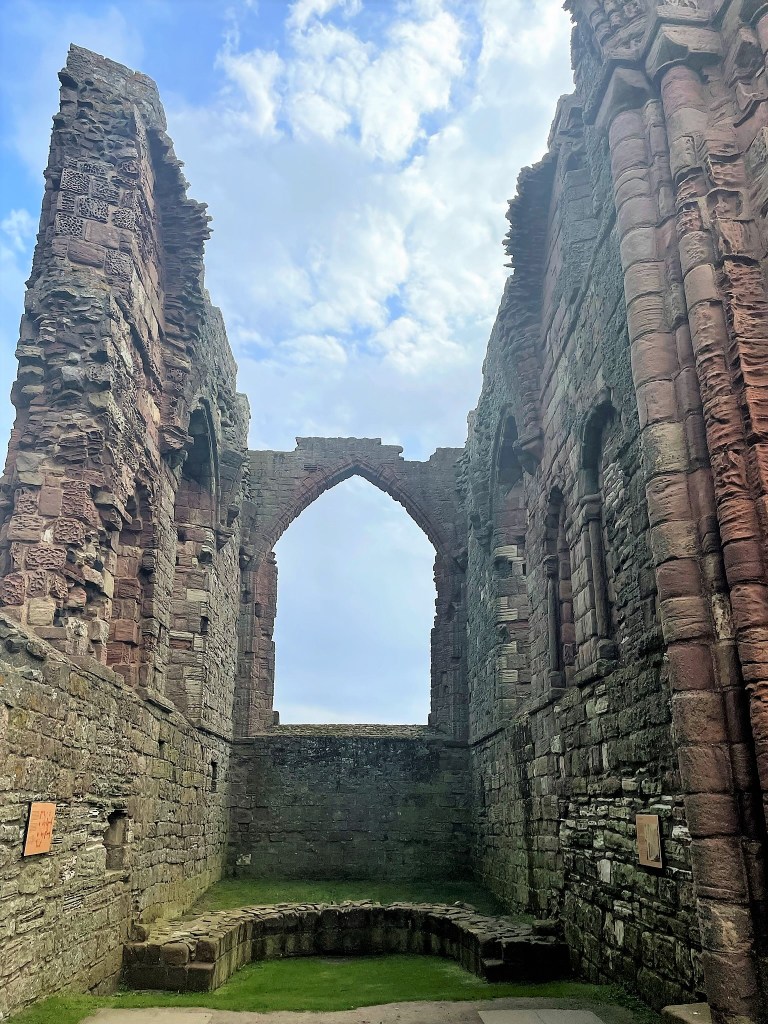
From the end of the 8th century, the isolated island with its rich monastery was easy prey for Viking raiders. In 875 the monks left, carrying Cuthbert’s remains, which after long wanderings were enshrined in Durham Cathedral in 1104, where they still rest. Only after that time did Durham monks re-establish a priory on Lindisfarne: the evocative ruins of the richly decorated priory church they built in c. 1150 still stand, with their famous ‘rainbow arch’ – a vault-rib of the now vanished crossing tower.

Lindisfarne castle is a distinctive landmark and can be seen on its loft crag from miles away. Following the dissolution of the monasteries by Henry VIII, the Castle was built in the 1550s using stones from the demolished Priory.

Alnwick Castle

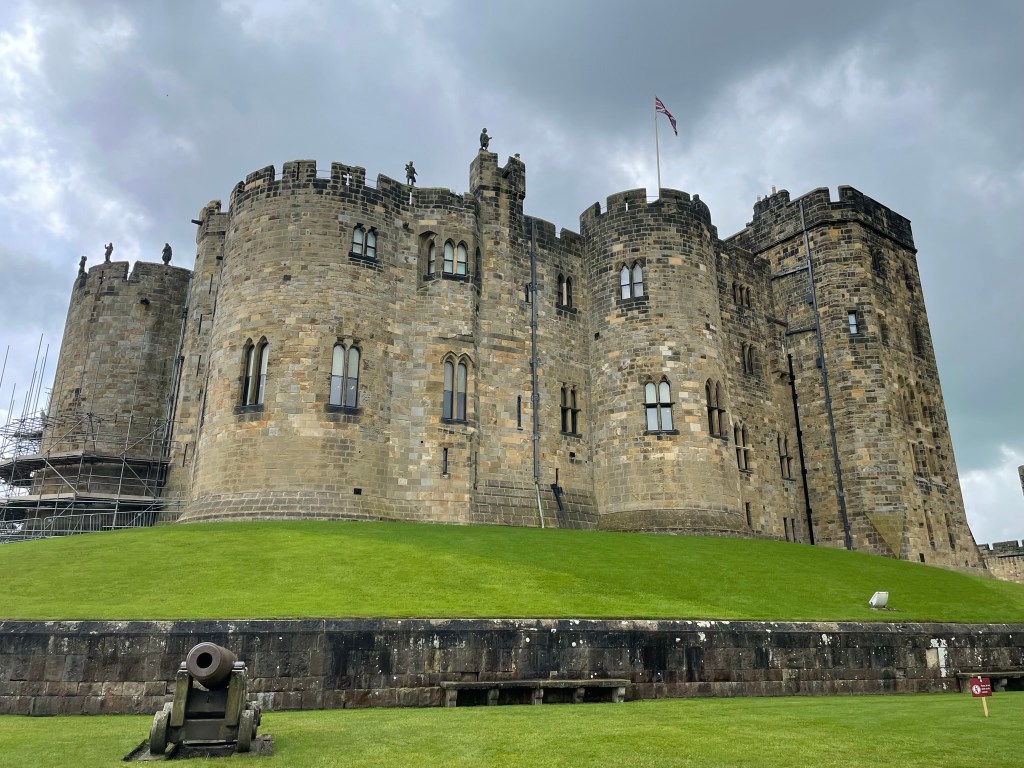
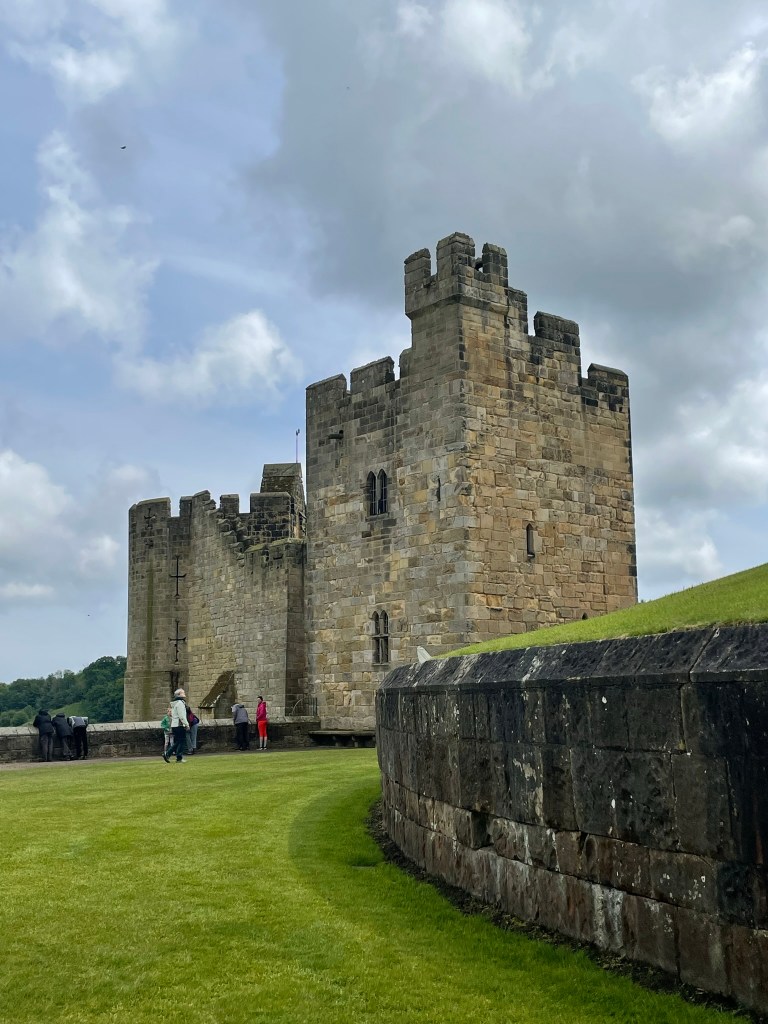
The second largest inhabited castle in the UK, Alnwick has served as a military outpost, a teaching college, a refuge for evacuees, a film set, and remains a family home. You might recognise it from the Harry Potter films, and on the day we visited there were broomstick ‘flying’ lessons and other Harry Potter themed activities happening throughout the day.

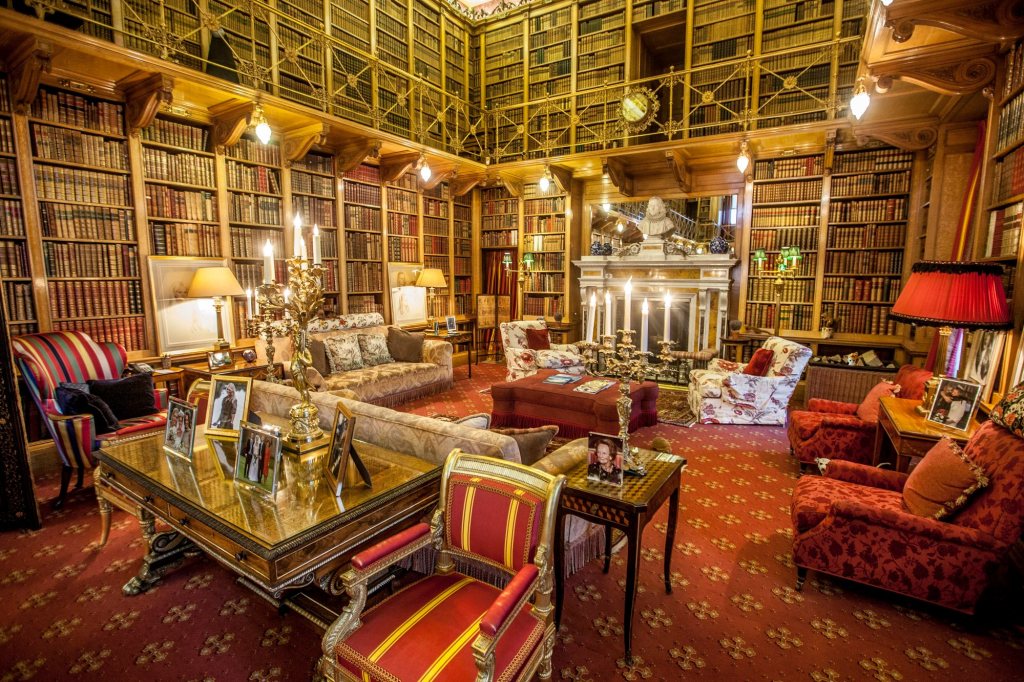
The castle construction began around 1096 and it became home to the Percy family (who still live there today) in 1309. The library is simply stunning with – cue book envy – over 14,000 books on its multi layered shelves. Because it’s still a family home, visitors are asked not to take photos inside, but this pic from the castle’s Facebook page shows the library in all its beauty.

Bamburgh Castle

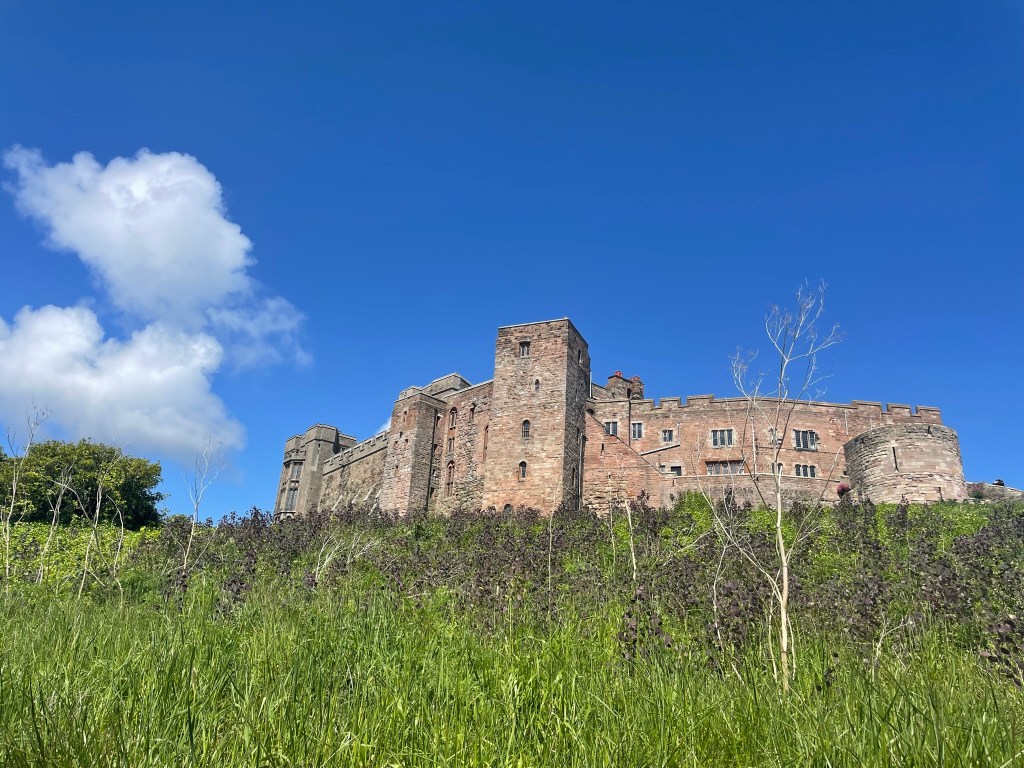
Bamburgh Castle has stood guard above the spectacular Northumberland coastline for over 1,400 years. Spanning nine acres of land on its rocky plateau, it’s one of the largest inhabited castles in the country.

There’s been some kind of defensive structure at Bamburgh since at least the 6th century and it’s regarded as the ancient capital of the powerful kingdom of Northumbria.

Bamburgh, or it’s ancient name of Bebbanburgh, is mentioned extensively throughout the TV series ‘The Last Kingdom’. The series was filmed mostly in Hungary, but some of the battle scenes from season three were filmed on Bamburgh beach in the shadow of the famous castle. Both Robin of Sherwood (TV series) and the movie Robin Hood Prince of Thieves also used Bamburgh as a set.

Dunstanburgh

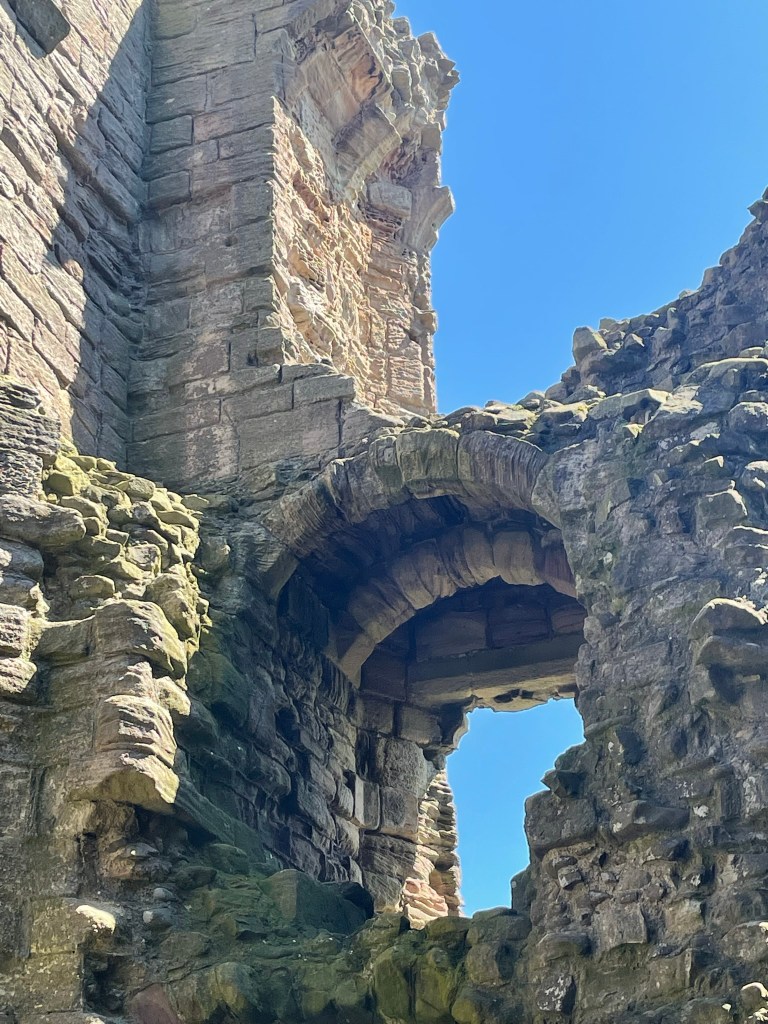
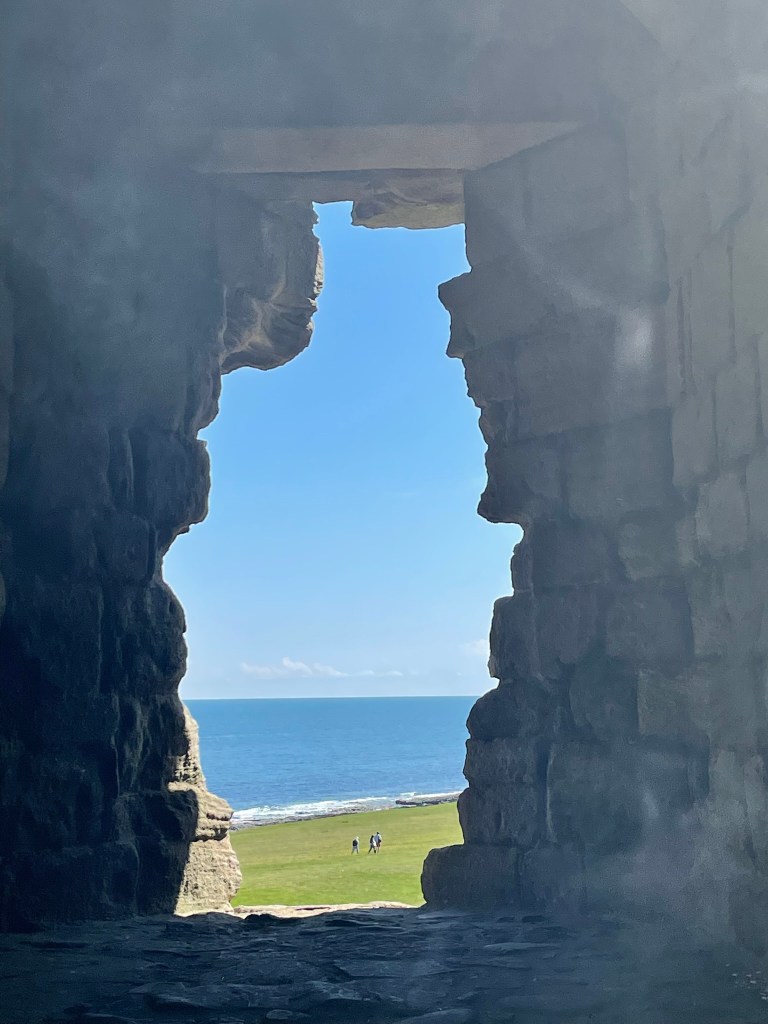
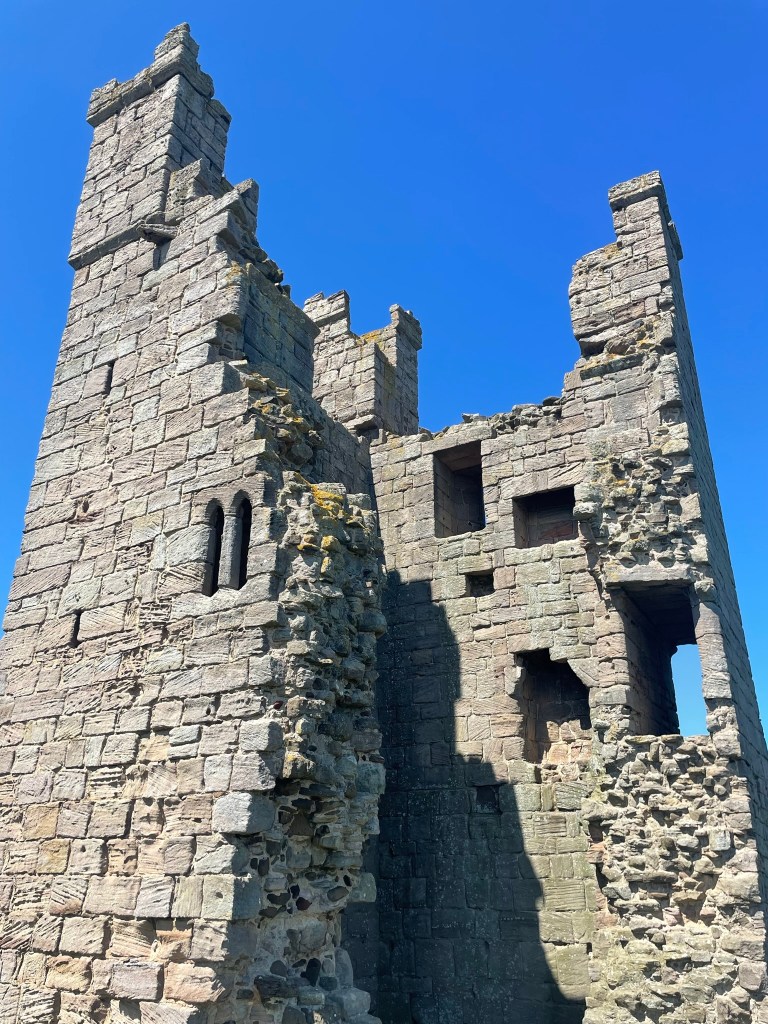
Well worth the walk, Dunstanburgh, is an iconic castle ruin and was once one of the largest and grandest fortifications in Northern England. It was built by Thomas, the Earl of Lancaster, between 1313 and 1322, a powerful English baron and the second richest man of his time, after the king of England.

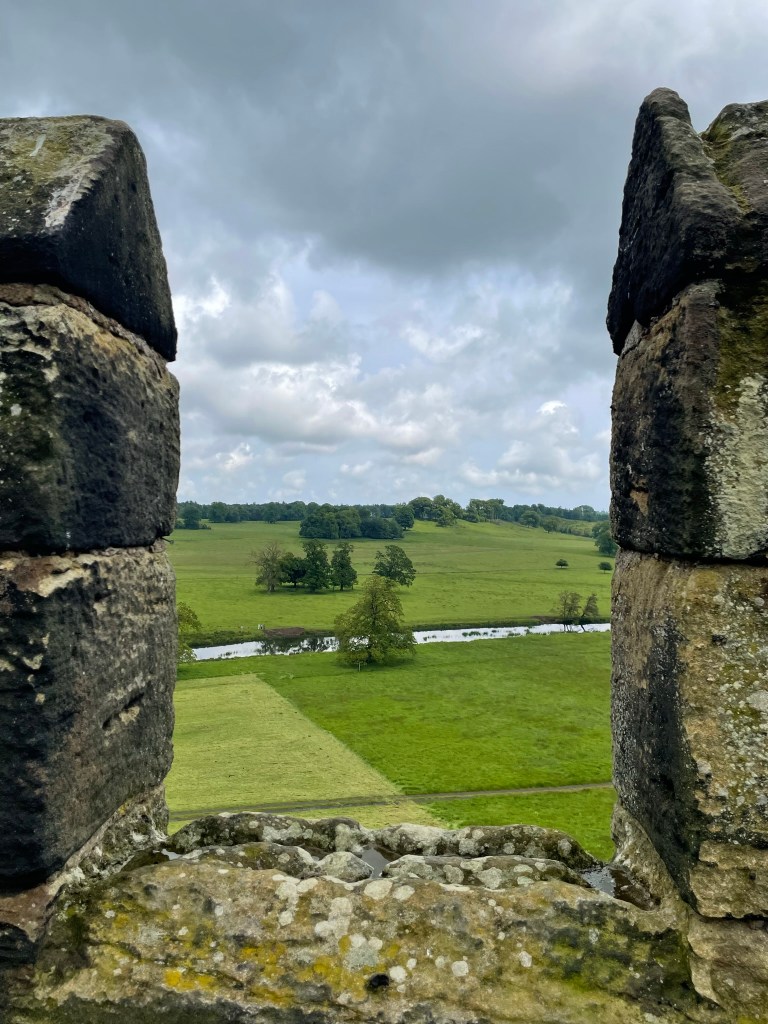
It’s a stunning ruin, and although it lacks the grandeur of Alnwick and Bamburgh, I enjoyed it the most. I like the honest simplicity of a ruin and how a ruin challenges your imagination. I’m always drawn to windows and doorways. Where did they lead to? What did the occupants see and what were they thinking as they looked out across the beautiful landscape? Some of the more manicured castles fill in those precious gaps too much for me.


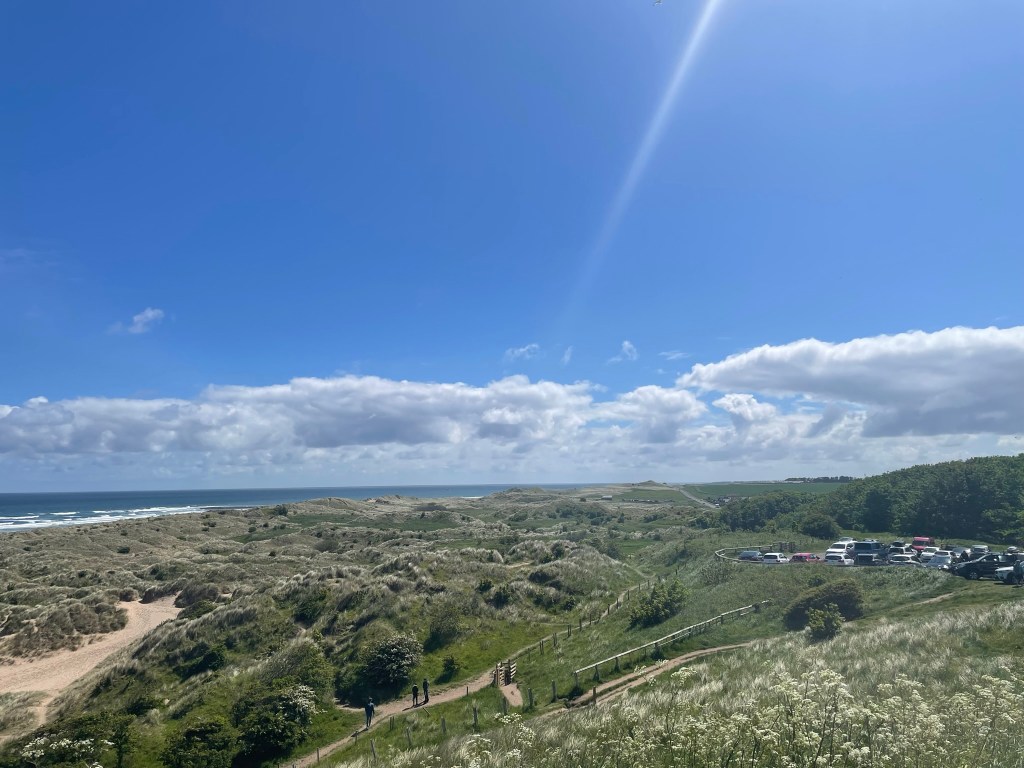
There are 70 castles in Northumberland, and we managed to visit three. In our defence, we were distracted by the gorgeous beach near our cottage and hindered by a couple of days of good old British rain.

Which castle provided the inspiration for Broadstone?

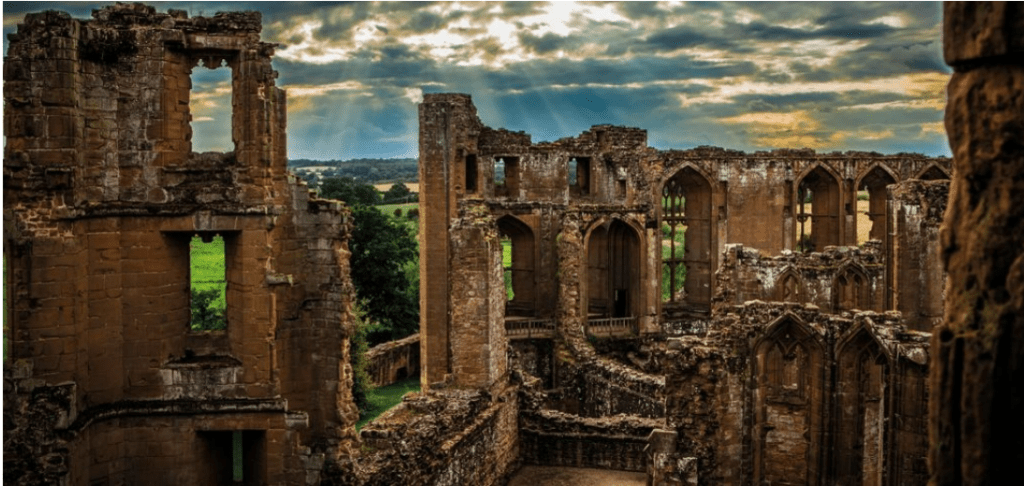
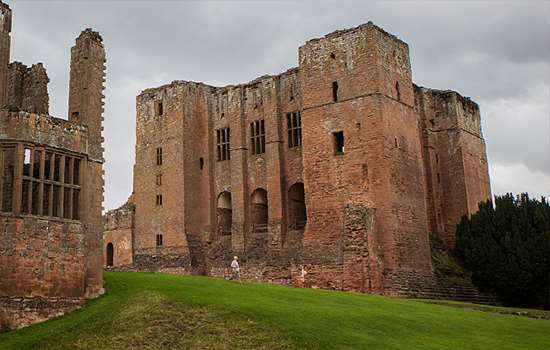
Although Broadstone is fictitious and an amalgamation of all the beautiful castles I’ve visited over the years, Kenilworth castle can probably take the credit for inspiring me the most. I first went in my late teens and I remember feeling a profound spiritual connection to it that I still can’t really explain. It’s mostly a ruin, but it blew me away.

The image of the keep (right) is the closest visually to how I imagine Broadstone castle.


Thanks for taking the time to read this post. If you found it informative and entertaining, please consider sharing it with your friends and followers on social media. And if you have any feedback or suggestions for future topics, I’d love to hear from you in the comments below. Don’t forget to subscribe for more content and updates, or pop over to my newsletter page for more crime stuff, direct to your inbox every month.

See you soon.

Wendy